
News
-

Rough processing of black tea – withering of tea leaves
During the initial production process of black tea, the product undergoes a series of complex changes, forming the unique color, aroma, taste, and shape quality characteristics of black tea. Withering Withering is the first process in making black tea. Under normal climatic conditions, fresh lea...Read more -

Tea tree pruning
Tea tree management refers to a series of cultivation and management measures for tea trees, including pruning, mechanized tree body management, and water and fertilizer management in tea gardens, aimed at improving tea yield and quality and maximizing tea garden benefits. Pruning of tea tree Dur...Read more -

Three key considerations for powder packaging
In the packaging equipment industry, the packaging of powder products has always been an important sub field. The correct powder packaging scheme not only affects product quality and appearance, but also relates to production efficiency and cost control. Today, we will explore three key points th...Read more -
Common faults and maintenance of fully automatic laminating packaging machine
What are the common problems and maintenance methods of film wrapping machines? Fault 1: PLC malfunction: The main fault of PLC is the adhesion of output point relay contacts. If the motor is controlled at this point, the fault phenomenon is that after a signal is sent to start the motor, it runs...Read more -

Black tea fermantation
Fermentation is a key process in the processing of black tea. After fermentation, the leaf color changes from green to red, forming the quality characteristics of red tea red leaf soup. The essence of black tea fermentation is that under the rolling action of leaves, the tissue structure of leaf ...Read more -

Knowledge of tea rolling
Tea rolling refers to the process in which tea leaves are rolled into strips under the action of force, and the leaf cell tissue is destroyed, resulting in moderate overflow of tea juice. It is an important process for the formation of various types of tea and the formation of taste and aroma. Th...Read more -
Applicable industries of filling sealing machines
Filling and sealing machine is a packaging equipment widely used in industries such as food, beverage, cosmetics, pharmaceuticals, etc. It can automatically complete material filling and bottle mouth sealing operations. It has the characteristics of speed, efficiency, and precision, and is suitab...Read more -
What do you know about vacuum packaging machines
A vacuum sealing machine is a device that evacuates the inside of a packaging bag, seals it, and creates a vacuum inside the bag (or fills it with protective gas after vacuuming), thereby achieving the goals of oxygen isolation, preservation, moisture prevention, mold prevention, corrosion preven...Read more -

tea fixation,tea sun drying and tea roasting
When we mention tea, we seem to feel a green, fresh, and fragrant aroma. Tea, born between heaven and earth, makes people feel calm and peaceful. Tea leaves, from picking a single leaf to withering, sun drying, and finally turning into a fragrant aroma on the tongue, are closely related to “...Read more -

Processing techniques for various types of tea
Classification of Chinese Tea Chinese tea has the largest variety in the world, which can be classified into two categories: basic tea and processed tea. The basic types of tea vary from shallow to deep depending on the degree of fermentation, including green tea, white tea, yellow tea, oolong te...Read more -

Things you must know about the tea bag packing machine
The convenience of bagged tea is well-known, as it is easy to carry and brew tea in a small bag. Since 1904, bagged tea has been popular among consumers, and the craftsmanship of bagged tea has gradually improved. In countries with strong tea culture, the market for bagged tea is also quite large...Read more -
difference between nylon teabag and PLA tea bag
Nylon material triangle tea bag, more popular in recent years, especially the fancy tea mostly adopts nylon tea bags. Advantage of strong toughness, not easy tear, can be placed more tea, the whole piece of tea to relax drive will not destroy the tea bag, mesh is larger, easier to make the tea fl...Read more -

Vacuum teabag packing machine leads the trend of small tea packaging
In recent years, with the popularity of green and environmentally friendly packaging, the tea packaging industry has adopted a minimalist style. Nowadays, when I walk around the tea market, I find that tea packaging has returned to simplicity, using environmentally friendly materials for independ...Read more -

Tips about tea tree pruning
After tea picking, it is natural to avoid the problem of pruning tea trees. Today, let’s understand why tea tree pruning is necessary and how to prune it? 1. Physiological basis of tea tree pruning Tea trees have the characteristic of apical growth advantage. The apical growth of the main s...Read more -
The Secret of Precise Filling Materials in Powder Packaging Machines
From the perspective of quantitative principles, powder packaging machines mainly have two methods: volumetric and weighing. (1) Fill by volume Volume based quantitative filling is achieved by controlling the volume of the filled material. The screw based quantitative filling machine belongs to t...Read more -
Non woven tea packaging machine
Tea bag is a popular way of drinking tea nowadays. Tea leaves or flower tea are packaged into bags according to a certain weight, and one bag can be brewed each time. It is also convenient to carry. The main packaging materials for bagged tea now include tea filter paper, nylon film, and non-wove...Read more -
What are the types of vacuum packaging machines?
With the acceleration of the pace of life, people’s demand for food preservation is also increasing, and vacuum packaging machines have become indispensable kitchen appliances in modern households and enterprises. However, there are many brands and models of vacuum packaging machines on the...Read more -
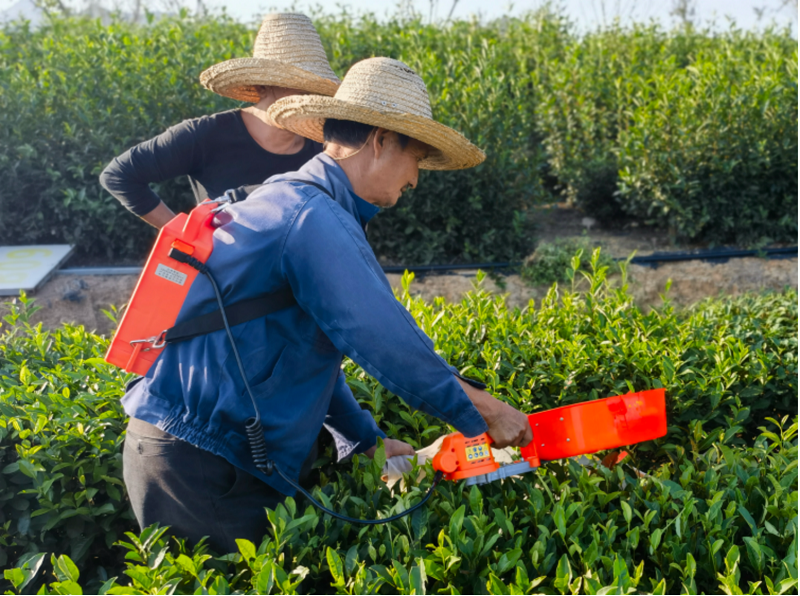
Which tea picking machine has the best picking effect?
With the acceleration of urbanization and the transfer of agricultural population, there is a growing shortage of tea picking labor. The development of tea machinery picking is the only way to solve this problem. At present, there are several common types of tea harvesting machines, including sin...Read more -
Automatic premade bag packaging machine: an efficient assistant for enterprise production lines
With the rapid development of technology, fully automatic premade bag packing machines have gradually become a powerful assistant on enterprise production lines. The fully automatic bag packaging machine, with its high efficiency and precision, is bringing unprecedented convenience and benefits t...Read more -
Learn about tea leaves fixation in one minute
What is tea fixation? Fixation of tea leaves is a process that uses high temperature to quickly destroy the activity of enzymes, prevent the oxidation of polyphenolic compounds, cause the fresh leaves to quickly lose water, and make the leaves soft, preparing for rolling and shaping. Its purpose ...Read more


